
Key Highlights
-
-
Incorporating bedtime yoga into your nightly routine can significantly improve sleep quality.
-
-
- Gentle yoga poses combined with deep breathing help calm your mind and body.
-
- This practice is an effective method for stress reduction, which is crucial for good mental health.
-
- Poses like Child’s Pose and Legs-Up-the-Wall release physical tension and promote relaxation.
-
- A consistent yoga practice can help reduce the time it takes to fall asleep.
-
- Yoga offers a holistic way to prepare yourself for a restful and rejuvenating night.
Introduction
Do you find yourself tossing and turning at night, struggling to quiet your mind? If a good night’s rest feels out of reach, bedtime yoga might be the perfect addition to your evening routine. This gentle practice combines slow movements, stretching, and mindfulness to prepare your body and mind for deep slumber. Exploring the benefits of yoga can transform your nights, helping to improve your overall sleep quality and leave you feeling more refreshed and ready for the day ahead.
7 Yoga Poses to Help You Sleep Better and Unwind Before Bedtime
Creating a simple bedtime yoga routine with a few key yoga asanas can make a remarkable difference in the quality of your sleep. These poses are designed to release tension from your body, quiet a restless mind, and guide you into a state of relaxation. You don’t need to be an expert to benefit from these gentle movements.
By dedicating just a few minutes each night to these stretches, you can create a calming ritual that signals to your body it’s time to wind down. Let’s explore seven specific poses that will help you relax and prepare for a peaceful night.
1. Child’s Pose (Balasana)
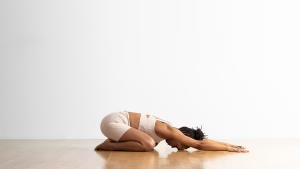
The Child’s Pose is a foundational resting posture that is perfect for calming your mind and releasing tension before bed. This gentle pose provides a wonderful stretch for your lower back and hips, areas where we often hold stress from the day. As you settle into the pose, it encourages you to turn your focus inward, making it a mental wind-down as much as a physical one.
To practice Balasana, you begin by kneeling on your mat. Bring your big toes to touch and separate your knees as wide as your hips. As you exhale, lower your torso between your thighs. You can either extend your arms out in front of you with palms down or let them rest alongside your body with palms facing up.
Focus on deep breathing as you hold the pose for one to three minutes. This practice helps to:
-
- Calm the mind and ease stress and anxiety.
-
- Gently stretch the back, hips, and thighs.
-
- Release built-up tension in the shoulders and neck.
2. Legs-Up-the-Wall Pose (Viparita Karani)
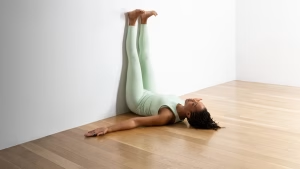
Legs-Up-the-Wall Pose is a deeply restorative inversion that is incredibly simple to do. This posture is excellent for promoting deep relaxation by calming the nervous system and refreshing blood circulation. By elevating your legs, you help reverse blood flow, which can relieve tired legs and feet after a long day. This pose offers a passive way to unwind the lower body and soothe minor back tension.
To get into this pose, sit close to a wall, then gently swing your legs up the wall as you lie on your back. Your sitting bones should be as close to the wall as is comfortable. Let your arms rest at your sides or overhead, whichever feels more relaxing.
Stay in this pose for three to five minutes, breathing gently and allowing your body to soften. The benefits of this pose include:
-
- Improving blood circulation and relieving tension in the legs and feet.
-
- Calming the nervous system to prepare the body for deep relaxation.
3. Reclining Bound Angle Pose (Supta Baddha Konasana)
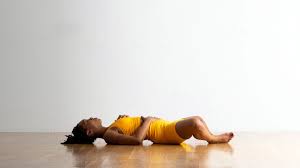
Reclining Bound Angle Pose is a serene, restorative posture that helps release stored tension in the lower body. It’s particularly effective for stretching the inner thighs, groin, and pelvic area. By allowing these muscles to relax, you can quiet your mind and body, making it an excellent pose for combating restlessness and preparing for sleep. This gentle hip opener also has a calming effect that can help lower blood pressure.
To practice this pose, lie on your back and bring the soles of your feet together, letting your knees fall open to the sides like a book. You can place your hands on your belly to feel your breath or rest them alongside your body. If you feel any strain, place pillows or blankets under your knees for support.
Hold the pose for a few minutes while taking deep, slow breaths to enhance its relaxing effects. This posture can:
-
- Open the hips and stretch the inner thighs, relieving physical tension.
-
- Help relieve symptoms of stress and mild depression.
4. Cat-Cow Stretch (Marjaryasana-Bitilasana)
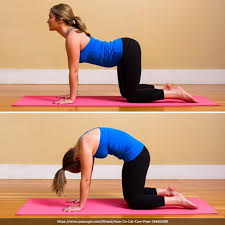
The Cat-Cow Stretch is a gentle, flowing sequence that warms up the spine and releases tension in the upper back and lower back. Linking your movement with your breath in this sequence can be meditative, helping you transition into a state of relaxation. It’s a wonderful way to improve spinal flexibility and gently massage your internal organs before settling in for the night.
Start on all fours with your wrists directly under your shoulders and your knees under your hips. On an inhale, drop your belly, lift your chest and tailbone, and look up for Cow Pose. On an exhale, round your spine toward the ceiling, tuck your chin to your chest, and press into your hands for Cat Pose.
Flow between these two poses for 5-10 breaths, using deep breathing techniques to guide your movements. This sequence helps to:
-
- Increase flexibility and relieve tension in the spine.
-
- Calm the mind through rhythmic, breath-synchronized movement.
5. Supine Spinal Twist (Supta Matsyendrasana)
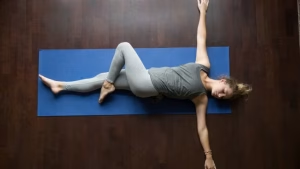
The Supine Spinal Twist is a deeply relaxing pose that helps release tension along the spine and in the lower back. Twists are known to be detoxifying and calming for the nervous system, making them a perfect addition to a pre-sleep routine. This pose helps neutralize the spine after a day of sitting or standing and can help lower cortisol levels by calming your body’s stress response.
To practice, lie on your back and hug your knees into your chest. Extend your arms out to the sides in a ‘T’ shape. As you exhale, slowly lower both knees to one side, keeping your shoulders flat on the floor. You can turn your head to look in the opposite direction for a deeper stretch.
Hold for several deep breaths before gently bringing your knees back to the center and repeating on the other side. This twist promotes relaxation by:
-
- Stretching the back muscles, hips, and chest.
-
- Calming the nervous system and reducing stress.
6. Standing Forward Bend (Uttanasana)
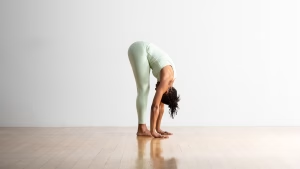
The Standing Forward Bend is a calming pose that gently stretches the hamstrings, calves, and hips while relieving muscle tension in the back, shoulders, and neck. This forward bend allows blood to flow to your brain, which can help quiet your mind and reduce stress and anxiety. It’s a simple yet powerful way to release the physical and mental burdens of the day.
Stand with your feet hip-width apart and take a deep inhale. As you exhale, hinge at your hips and fold your upper body over your legs. You can keep a slight bend in your knees to protect your lower back. Let your head hang heavy, and you can either rest your hands on the floor, your shins, or grasp your big toes.
Hold the pose for several breaths, feeling the release in your spine and hamstrings. This pose is beneficial because it:
-
- Relieves tension in the spine, neck, and back.
-
- Calms the mind and helps reduce anxiety.
7. Corpse Pose (Savasana)
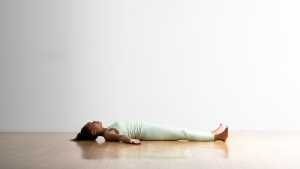
Corpse Pose, or Savasana, is the ultimate posture for achieving a complete state of relaxation. While it may look like you’re simply lying down, this pose is a practice in conscious rest. It allows your body to fully absorb the benefits of the preceding poses and helps lower your heart rate, reduce blood pressure, and provide significant stress relief. It is the perfect way to end your bedtime yoga sequence.
Lie flat on your back, with your legs slightly apart and your arms resting alongside your body with palms facing up. Close your eyes and let go of any controlled breathing. Allow your body to feel heavy and completely supported by the floor.
Stay here for at least 5-10 minutes, consciously relaxing every part of your body from your toes to your head. Savasana is essential for sleep because it:
-
- Induces deep physical and mental relaxation.
-
- Calms the nervous system and helps reduce fatigue and anxiety.
Why Yoga Before Bedtime Supports Deep Sleep
A regular yoga practice before bed is more than just a series of stretches; it’s a holistic practice that prepares your mind and body for deep sleep. The combination of gentle movement, mindful breathing, and focused relaxation helps shift you away from the stressors of daily life. This allows your mind to quiet down, making it easier to drift off peacefully.
By consistently engaging in this calming ritual, you train your body to recognize these movements as a signal for rest. This can help regulate your internal clock and guide you into a state of relaxation that is ideal for achieving restorative, high-quality sleep. The following sections explore exactly how yoga achieves this.
How Yoga Calms the Mind and Body for Restful Sleep
Yoga’s ability to promote restful sleep lies in its profound effect on the nervous system. The practice of mindful breathing, a core component of yoga, is key to this process. When you focus on slow, deep breaths, you activate the parasympathetic nervous system, which is your body’s “rest and digest” response. This counteracts the “fight or flight” response that often keeps you awake and stressed.
This activation leads to a cascade of physiological changes that encourage relaxation. Your heart rate slows, your blood pressure drops, and your muscles begin to release tension. This shift creates the perfect internal environment for sleep, helping you achieve a calm mind free from racing thoughts.
Ultimately, yoga teaches you to become more aware of the connection between your thoughts and physical sensations. This heightened mindfulness allows you to identify stress as it arises and use your breath and movement to manage it effectively, paving the way for a peaceful night.
Stress Relief Through Evening Yoga Practice
An evening yoga practice is an incredibly effective tool for stress management. Throughout the day, stressors can cause your body to produce high levels of cortisol, the primary stress hormone. Elevated cortisol levels are linked to a range of health issues, including insomnia. Yoga provides powerful stress relief by helping to lower these cortisol levels, which in turn helps to calm your mind and body. By consciously moving and breathing, you can ease stress that has accumulated in your muscles and mind.
Gentle styles like restorative yoga are particularly beneficial, as they focus on passive stretching and deep relaxation. These practices teach you to release physical and mental tension, making it much easier to unwind before bed and enjoy a more peaceful sleep.
Impact of Yoga on Insomnia and Sleep Disorders
For those struggling with insomnia and other sleep disorders, yoga can offer significant relief. Numerous studies have explored the connection between a consistent yoga practice and improved sleep quality. Scientific research consistently shows that yoga can reduce the time it takes to fall asleep, decrease the number of times you wake up during the night, and improve overall sleep efficiency.
One study published in the Journal of Clinical Nursing found that participants who practiced yoga regularly experienced significant improvements in their sleep quality and a reduction in the severity of insomnia. [Source: https://onlinelibrary.wiley.com/doi/abs/10.1111/jocn.15508] This is because yoga addresses both the physical and psychological factors that contribute to poor sleep.
By calming the nervous system and reducing stress, yoga helps create a foundation for better rest. The table below highlights some key findings from research on yoga and sleep.
| Aspect of Sleep | Impact of Regular Yoga Practice |
|---|---|
| Sleep Onset Latency | Reduces the time it takes to fall asleep. |
| Sleep Duration | Can increase total sleep time for some individuals. |
| Nighttime Awakenings | Decreases the frequency and duration of waking up during the night. |
| Overall Sleep Quality | Improves self-reported sleep quality and daytime functioning. |
Building Your Bedtime Yoga Routine: Tips for Beginners
Starting a bedtime yoga routine is simple, and you don’t need any prior experience to reap the benefits. Beginner yoga for sleep focuses on gentle, accessible poses that anyone can do. The key is to create a peaceful environment and listen to your body, moving in a way that feels good to you.
If you’re new to the practice, you might consider seeking guidance from a certified yoga instructor, who can help you with proper alignment and modifications. There are many different styles of yoga, so finding one that emphasizes relaxation, like Hatha or Restorative yoga, is a great place to start.
Recommended Sequence and Duration for Nightly Yoga
For your nightly yoga practice to be effective, consistency is more important than duration. Aim for a 15-20 minute session each evening to help your body and mind wind down. Creating a simple sequence can help you establish a regular practice and signal to your body that it’s time for bed.
A great sequence starts with gentle movements to warm up the body, moves into deeper stretches, and ends with a period of deep relaxation. You can follow the order of the poses discussed in this article, as they flow naturally from one to the next, preparing you for rest.
Here is a simple sequence you can follow:
-
- Warm-up: Start with a few rounds of Cat-Cow Stretch to gently mobilize your spine.
-
- Main Poses & Cool-down: Move through Child’s Pose, Supine Spinal Twist, and Legs-Up-the-Wall Pose, holding each for a few minutes before finishing with at least five minutes in Corpse Pose.
Safe Modifications for Beginners and All Ages
Yoga for sleep should be accessible and safe for all ages and fitness levels. The goal is to release physical tension, not create it, so listening to your body is crucial. Safe modifications can help you get the most out of each pose without risking injury. Never push yourself into a position that causes pain.
If you have tight hamstrings, for example, always maintain a slight bend in your knees during forward folds to protect your low back. Using props like pillows, blankets, or yoga blocks can also provide support and make poses more comfortable. Place a blanket under your hips in Child’s Pose or under your knees in Reclining Bound Angle Pose to reduce strain.
Here are a few tips for a safe practice:
-
- Use a folded blanket under your knees for cushioning in poses like Cat-Cow.
-
- In Legs-Up-the-Wall, place a pillow under your hips to gently elevate them.
-
- Move slowly and deliberately, paying attention to how each pose feels in your body.
Essential Breathing Techniques to Enhance Sleep Benefits
Pairing your yoga practice with essential breathing exercises can dramatically enhance its sleep-inducing benefits. Mindful breathing, or pranayama, is a powerful tool for calming the nervous system and quieting a busy mind. By focusing on your breath, you anchor yourself in the present moment and shift your body into a state of deep relaxation.
One of the most effective breathing techniques for sleep is deep belly breathing. As you inhale, allow your belly to expand fully, and as you exhale, let it gently fall. This type of deep breathing maximizes oxygen intake and stimulates the vagus nerve, which helps regulate your relaxation response.
Other helpful breathing exercises include:
-
- 4-7-8 Breathing: Inhale for 4 counts, hold for 7, and exhale slowly for 8.
-
- Alternate Nostril Breathing (Nadi Shodhana): This technique helps balance the left and right sides of the brain, promoting harmony and calmness.
Conclusion
In summary, incorporating yoga poses into your nighttime routine can significantly enhance the quality of your sleep. The combination of gentle stretches and mindful breathing not only calms the mind but also soothes the body, creating the perfect environment for restful slumber. By regularly practicing these seven poses, you can alleviate stress and tension built up throughout the day, making it easier to drift off into a deep, uninterrupted sleep. Remember, consistency is key in building a beneficial bedtime yoga routine. So, roll out your mat tonight and take a step towards better sleep! If you’re looking for personalized guidance, don’t hesitate to reach out for a free consultation.
Frequently Asked Questions
Can yoga really help me fall asleep faster?
Yes, absolutely. Yoga practices help you fall asleep faster by promoting relaxation and stress reduction. The combination of gentle movement and deep breathing calms your nervous system, reduces muscle tension, and guides your mind and body into a state of relaxation that is ideal for improving sleep quality.
How many minutes should I practice yoga at night for better sleep?
A nightly yoga routine of just 15-20 minutes can make a significant difference. Consistency is more important than length. A short, regular practice of gentle styles like Hatha yoga or restorative yoga is enough to signal to your body that it’s time to wind down and prepare for sleep.
Are there scientific studies on yoga improving sleep quality?
Yes, there are numerous studies that support the benefits of yoga for sleep. Scientific research has shown that the regular practice of physical postures and breathing techniques can improve overall sleep quality, reduce the time it takes to fall asleep, and positively impact mental health by reducing symptoms of insomnia.